Mystic Bazaar
A Magical World of Tarot, Trunks and Mystery
Some installations come from a place of imagination, whereas others feel like they arrive from another realm entirely. My Mystic Bazaar Tarot Cards were one of those pieces. Created for the City of Joondalup’s annual Joondalup Festival, this immersive installation was designed as the stage setting for Bogomil’s Magic Show; a world where tarot, illusion and storytelling came to life.
The vision was to transport audiences into a space that felt like stepping inside a travelling magician’s tent; part mystical curiosity shop, part enchanted market, filled with texture, treasures and the magic of tarot.
Inspiration: The Allure of Old-World Magic
The inspiration for Mystic Bazaar came from a lifelong fascination with mysticism, folklore and the aesthetics of wonder. The kind of places that smell like incense and dust, where every object holds a secret and every corner glimmers with possibility.
I wanted to capture that sense of old-world charm and infuse it with the warmth of a festival setting. The design pulled from tarot symbolism, romani-style markets and vintage curiosity stalls, blending layers of storytelling, spirituality and visual drama.
The Process: Building a World of Tarot and Treasure
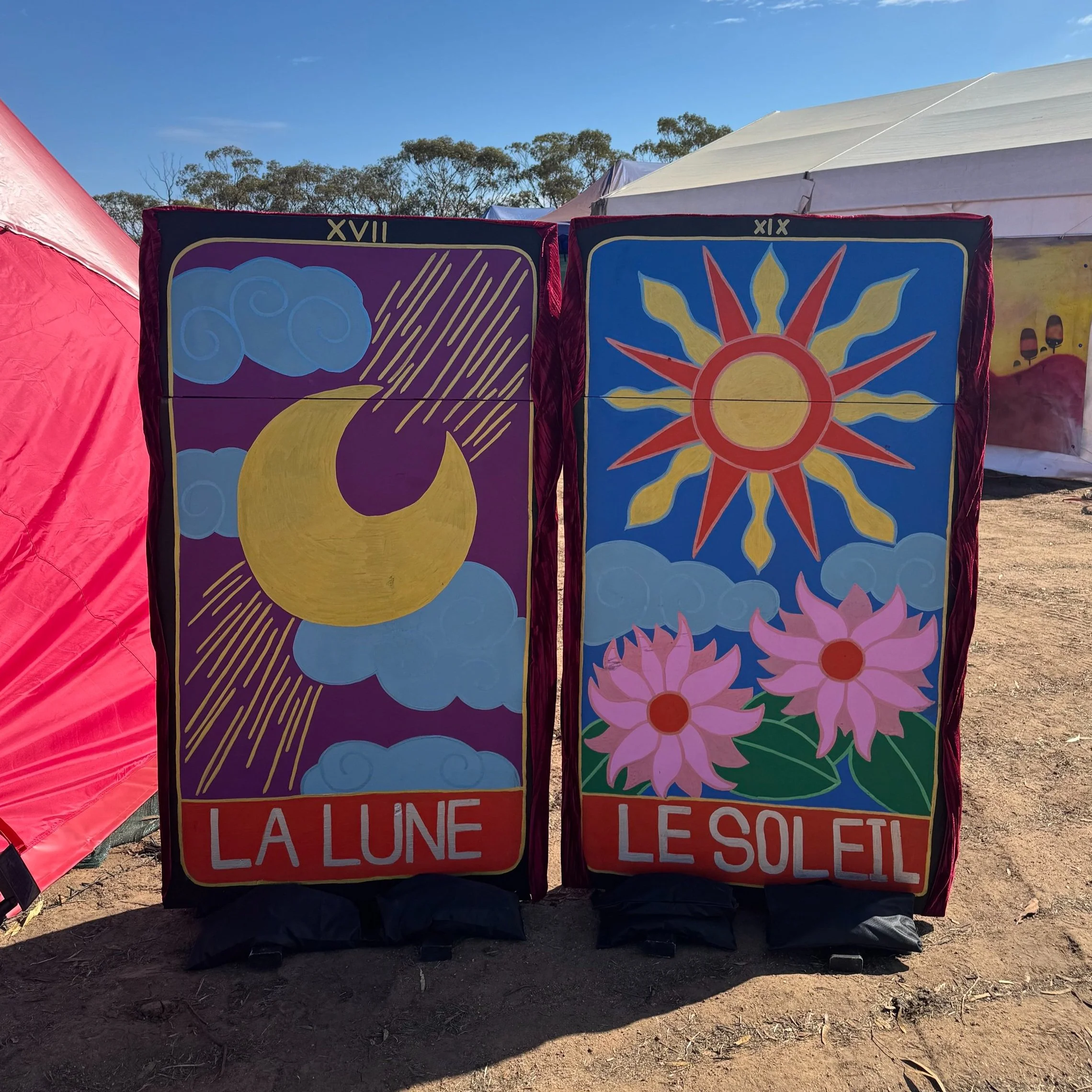
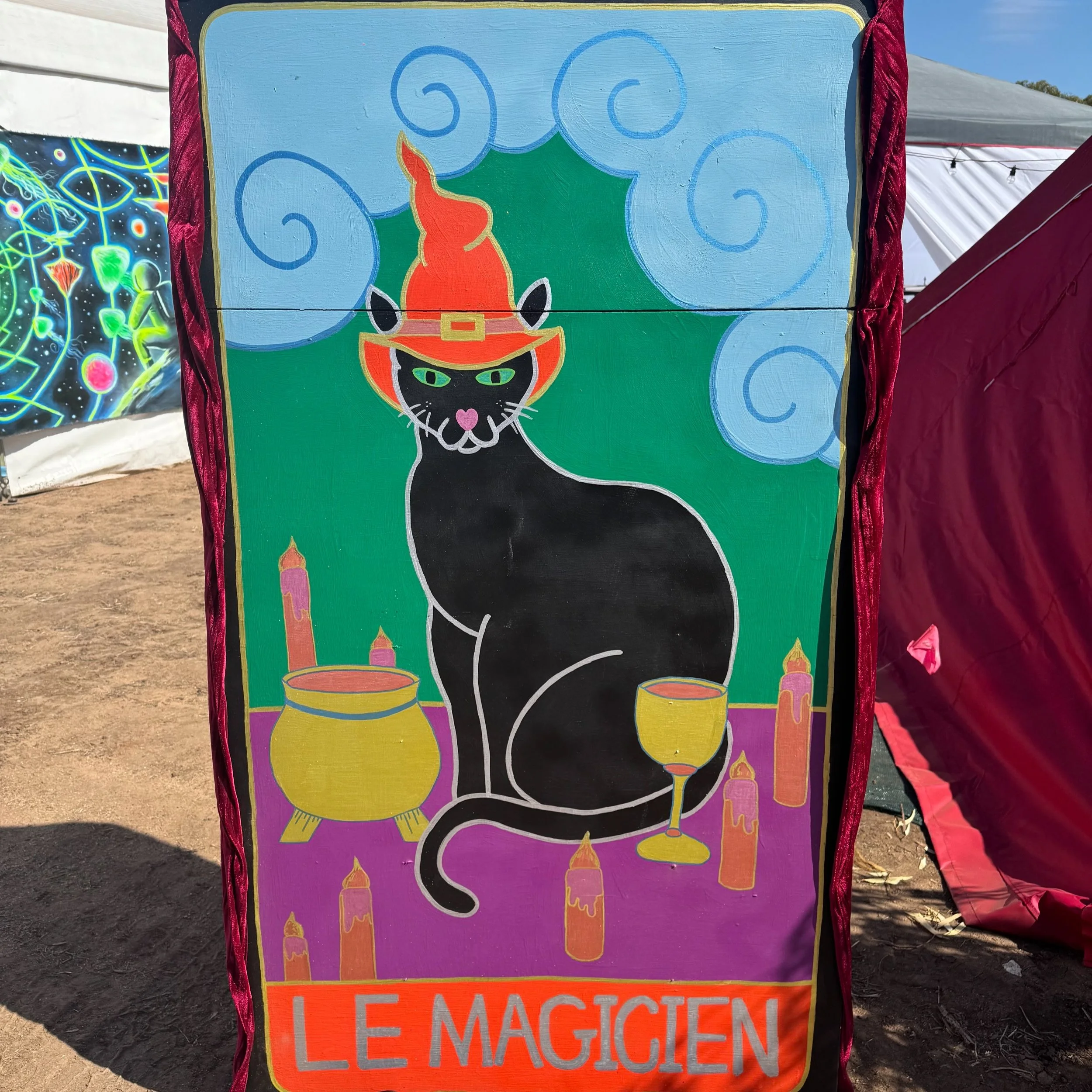
The installation was anchored by three giant hand-painted tarot cards: The Sun, The Moon and The Magician. Each standing tall as illuminated backdrops, draped in red velvet for the Bogomil’s magical performance.
Every card was created to hold its own energy:
🌞 The Sun radiated warmth and optimism, painted in gold and amber hues with blue skies and bright flowers below.
🌕 The Moon shimmered in silver and deep indigo, mysterious and dreamlike.
🪄 The Magician (my personal favourite) featured a black cat magician, a playful nod to intuition, curiosity and a little bit of chaos magic.
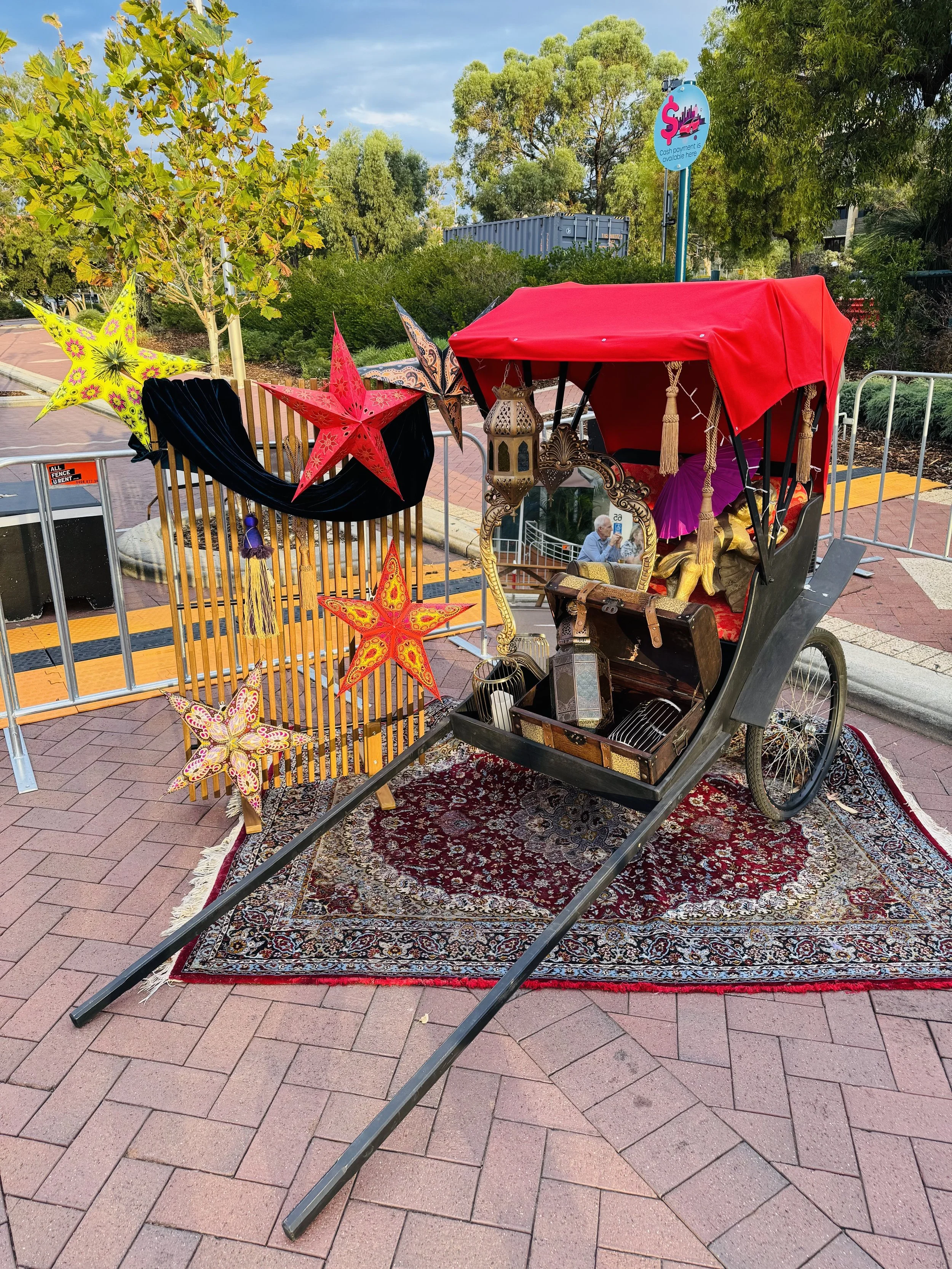
Around these focal points, I curated a collection of vintage treasures and found objects: old trunks, treasure chests, lamps, fabrics, lanterns and ornate rugs layered together to create a space that felt both lived-in and otherworldly.
An old cart became another centrepiece of the installation that I stacked with curiosities and props that blurred the line between performance and installation. Every object was chosen for its story, whether it was a chipped lamp, a brass candlestick, or a piece of velvet fabric that caught the light just right.
The result was a magical, bohemian world that looked like it had travelled through time and dimension before landing at Joondalup Festival.
The Final Experience: Where Magic Meets Art
During the festival, Mystic Bazaar became the beating heart of Bogomil’s show and main stage area for the festival: part stage, part portal, part atmosphere. The tarot cards towered behind them as they performed, glowing softly under lantern light while the audience sat among the rugs and trunks, completely immersed in the illusion.
As dusk fell, the installation took on a new life as the fabrics glowed in the golden hour, the lamps flickered, and the whole space pulsed with the kind of festival magic that can’t quite be captured in photos.
People wandered through after each show, inspecting the props, touching the textures, and losing themselves in the details. It became both a performance space and an artwork in its own right: a collaborative fusion of art, story, and stagecraft.
The Takeaway: Storytelling Through Space
Mystic Bazaar reminded me why I love blending art and environment; because immersive design isn’t just about decoration; it’s about world-building.
Creating this piece was a lesson in how texture, symbolism, and storytelling can transform an ordinary stage into an experience. It showed how visual worlds can support performance, deepen connection, and bring audiences into the story before a single word is spoken.